Flat Tires and Desert Roads: What Every Arizona and New Mexico Driver Should Know
Desert driving puts unique stress on tires that most drivers never think about until they hear the pop. Between scorching pavement temperatures, road debris that collects on shoulders and construction zones, and long stretches of highway between service stations, a flat tire in Arizona or New Mexico is more than an inconvenience. It can be a safety event that leaves you stranded miles from help in extreme conditions. Understanding what causes flats on desert roads and knowing what to do when one happens can make the difference between a brief delay and a dangerous situation.
- Hot pavement dramatically increases tire pressure and accelerates wear on under-inflated or aging tires, making blowouts more common in summer months
- Construction debris, gravel shoulders, and desert road hazards cause punctures that may not show up until hours after you picked up the object
- Many newer vehicles no longer include a spare tire, which means roadside tire service is the only option when a flat happens away from a shop
Why Desert Roads Are Harder on Tires
Asphalt surface temperatures in Phoenix can reach 150 to 170 degrees during summer months. That heat transfers directly into the rubber compound of your tires, softening it and making it more vulnerable to punctures and tread separation. At the same time, heat causes the air inside the tire to expand. For every 10-degree increase in ambient temperature, tire pressure rises by about 1 PSI. A tire that was properly inflated at 35 PSI in your garage at 7 AM can be running at 39 or 40 PSI by the time you hit the freeway in afternoon traffic. That over-pressurization stresses the sidewalls and changes the contact patch, making the tire more susceptible to damage from potholes and road debris.
Road conditions compound the problem. Desert highways carry a lot of construction traffic, and gravel, metal fragments, screws, and wire are common on shoulders and in construction zones along I-10, I-17, and I-40. The dry climate also means debris stays on the road longer because there is no rain to wash it into drainage. Tires pick up these objects constantly, and many punctures are slow leaks that develop over hours before the driver notices anything wrong.
Tire Age Matters More Than You Think
Tire rubber degrades with age regardless of tread depth. Ultraviolet exposure and sustained heat break down the chemical bonds in the rubber compound, a process called oxidation. In cooler climates, a tire with good tread might safely last six or seven years. In the desert Southwest, most tire manufacturers and safety organizations recommend replacement after four to five years, even if the tread still looks adequate. You can check the age of any tire by reading the DOT code on the sidewall. The last four digits indicate the week and year of manufacture. A tire stamped 2621, for example, was made in the 26th week of 2021.
Tires that sit for long periods without being driven are especially vulnerable. If you have a vehicle that spends most of its time parked in the Arizona sun, the sidewalls are degrading even though the tread is barely worn. Spare tires mounted underneath trucks and SUVs are exposed to the same conditions and often forgotten entirely until the driver needs them, at which point they may be dry-rotted and unsafe to use.
What to Do When You Get a Flat
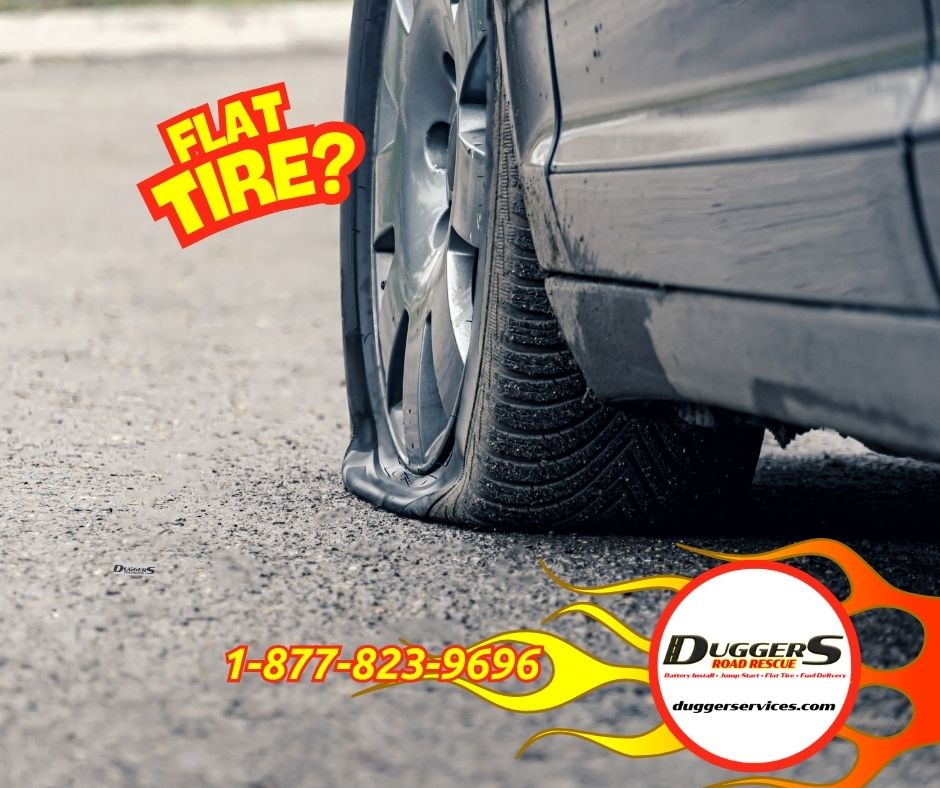
If you feel a sudden loss of control, hear a loud pop, or notice the steering pulling hard to one side, you are dealing with a flat or a blowout. The first instinct is to brake hard, but that can make things worse. Instead, keep a firm grip on the steering wheel, ease off the accelerator gradually, and guide the vehicle toward the right shoulder or the nearest safe pull off. Turn on your hazard lights immediately. Once you are stopped and safely off the travel lanes, stay in the vehicle if you are on a highway with fast-moving traffic. Standing on the shoulder of I-10 or Loop 101 during rush hour is extremely dangerous.
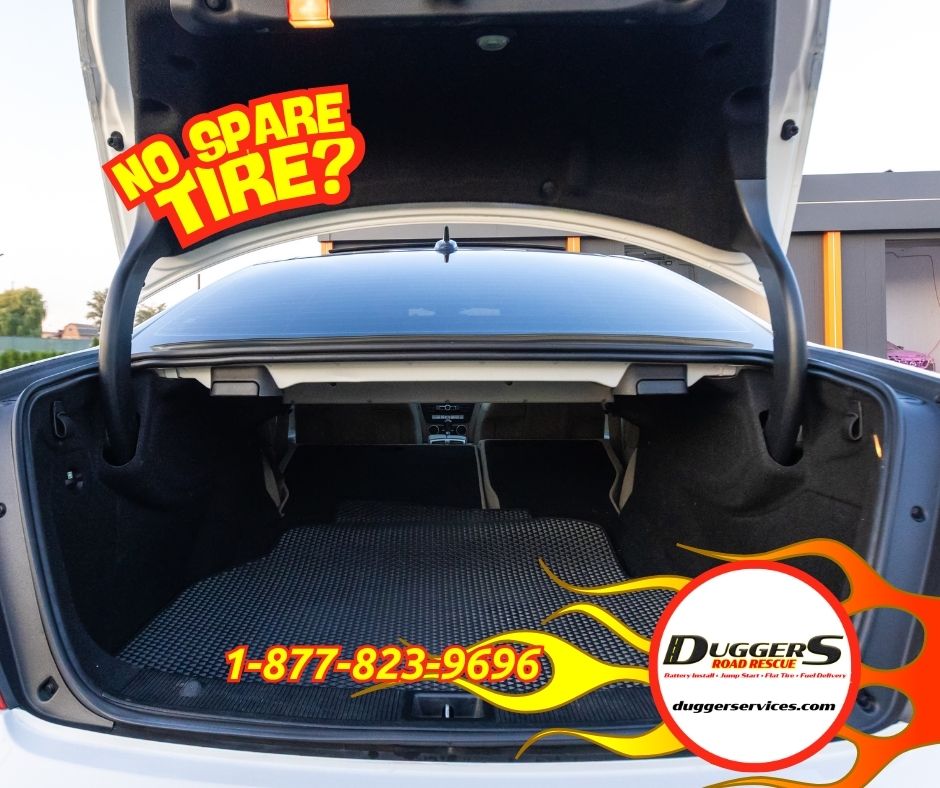
If you have a spare tire and know how to change it safely, you can handle the swap yourself as long as you are in a location where it is safe to do so. But here is the reality for many drivers today: a growing number of newer vehicles ship without a full-size spare. Some include a compact temporary spare. Others come with only a tire sealant kit and an inflator, which will not help with a sidewall blowout or a large puncture. If you do not have a usable spare or you are in a location where changing a tire on the shoulder is not safe, a phone call is the right move.
How Roadside Tire Service Works
Dugger’s Road Rescue dispatches a tire technician to your location to assess the situation. If you have a spare, the technician handles the change so you do not have to do it yourself on a hot shoulder or in a dark parking lot. If the tire can be repaired on-site, we handle that too. If you need a replacement tire and do not have a spare, we work with you to arrange the right solution to get you moving again. Service is available 24 hours a day, 365 days a year, across the Phoenix metro, Tucson, Albuquerque, and Rio Rancho. Average response time is 30 minutes from the time you call.
Over 2 million completed service calls means our technicians have seen every scenario. Blowouts on the Loop 202 at rush hour. Slow leaks in airport parking lots. Nails picked up in construction zones on I-40 outside Albuquerque. Whatever the situation, the process is straightforward: you call, we come to you, and we handle it.
Flat tires are an unavoidable part of driving in the desert. The heat, the road conditions, and the distances between service stations all work against your tires. Checking your tire pressure regularly, inspecting your tread and sidewalls for damage, and knowing when your tires have aged past their safe service life are the best ways to reduce your risk. And when a flat does happen, keep our number saved. You should not have to figure it out alone on the side of the road.
Dugger’s Road Rescue
24/7 Emergency Roadside Assistance
Phoenix Metro | Tucson | Albuquerque | Rio Rancho
(877) 823-9696
Se Habla Español

