
Dust Storm Season on I-10: How to Stay Safe on the Drive Between Phoenix and Tucson
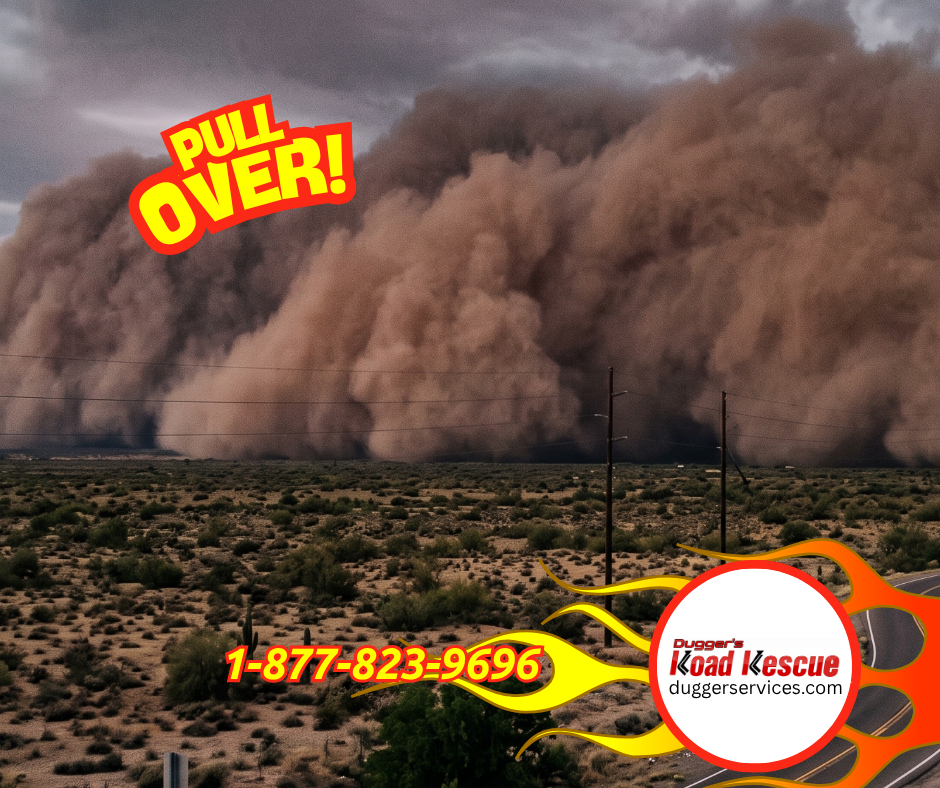
Every monsoon season, the stretch of Interstate 10 between the southeast Valley and Tucson becomes one of the most dangerous drives in Arizona. A wall of dust can roll across the open desert and drop visibility to near zero before you have time to react. August sits at the heart of dust storm season, and thousands of drivers make this run every day for work, school, and medical appointments. Knowing what to do before the dust hits is the difference between a scary story and a serious wreck.
- A haboob, a wall of dust and debris, can cut visibility to near zero in under a minute, and the open desert between Casa Grande and Picacho Peak is where it happens most
- The safest response is counterintuitive: pull far off the road, turn off every light, and keep your foot off the brake
- A summer-weakened battery is most likely to quit right when you need to restart, so get it tested before you make the drive
Why This Stretch of Highway Is Different
The corridor between the southern edge of the Phoenix metro and the Tucson city limits runs through miles of open farmland and loose desert soil. When monsoon thunderstorms collapse, they push walls of dust across the interstate near Casa Grande, Eloy, and Picacho Peak with almost no warning. This stretch has seen repeated multi-vehicle pileups over the years, and highway signs along the route now warn drivers year-round. The monsoon runs from mid-June through the end of September, and the storms tend to arrive in the late afternoon and evening, exactly when commuters and students are on the road. If a dust channel or storm warning is active for Pinal County, the smartest move is simply to wait it out before you leave.
Pull Aside, Stay Alive
Arizona’s official guidance is blunt: never drive into a dust wall. If you see one crossing the highway ahead, exit at the next ramp and wait. If the dust overtakes you, slow down immediately, pull as far off the pavement as you safely can, and stop. Then do the part most drivers get wrong: turn off every light on the vehicle, including your hazard flashers. Drivers behind you in the dust will steer toward any light they see, assuming it is a moving car. Set the parking brake, take your foot off the brake pedal so your brake lights stay dark, keep your seatbelt on, and keep the windows up. Most dust walls pass in a matter of minutes. Stay put until you can see clearly in both directions.
The Breakdown Risk Nobody Plans For
There is a second danger built into this drive that gets far less attention: your battery. By August, an Arizona car battery has absorbed a full summer of engine-bay temperatures that can climb past 160 degrees, and that heat permanently damages the chemistry inside. A weak battery often starts the car all morning and then refuses after a stop, which is exactly what happens when you pull aside for a storm, shut everything down, and try to restart. Being stranded on the shoulder between Phoenix and Tucson, in blowing dust or triple-digit heat, is not a place anyone should sit for long.
That is the gap Dugger’s Road Rescue was built to close. We dispatch 24 hours a day, 7 days a week, 365 days a year across the greater Phoenix and Tucson areas, with a technician on site within about 60 minutes. If the battery will not hold, we test it in front of you and can install a new heat-rated battery on the spot, backed by a 2-year warranty. Jump starts, fuel delivery, flat tires, and lockouts are all handled the same way: we come to you, so you are never walking a desert highway for help.
Before your next run down I-10, check the forecast, top off your fuel, and have your battery tested if it is more than two years old. Then save our number where you can reach it. If the desert catches you anyway, help is one call away.
Dugger’s Road Rescue
(602) 274-1506 | Toll-free 1-877-823-9696
duggerservices.com

