
Running on Empty: Why Running Out of Gas Can Hurt a Fuel-Injected Car
Running out of gas seems like a small problem. Nothing is broken. You just drove a little too far. But on a modern car, running the tank dry can be hard on the fuel pump. With Thanksgiving travel starting next week, here is what happens when a car runs out of gas, how to restart it the right way, and what to do if it happens to you.
- The electric fuel pump in most modern cars sits inside the gas tank, and the fuel around it helps keep it cool
- Cranking the engine over and over after you run out will not help, and it can drain your battery
- If you run out, stay with the car, call for fuel, and let the pump fill the fuel lines before you start the engine
The Fuel Pump Sits Inside Your Gas Tank
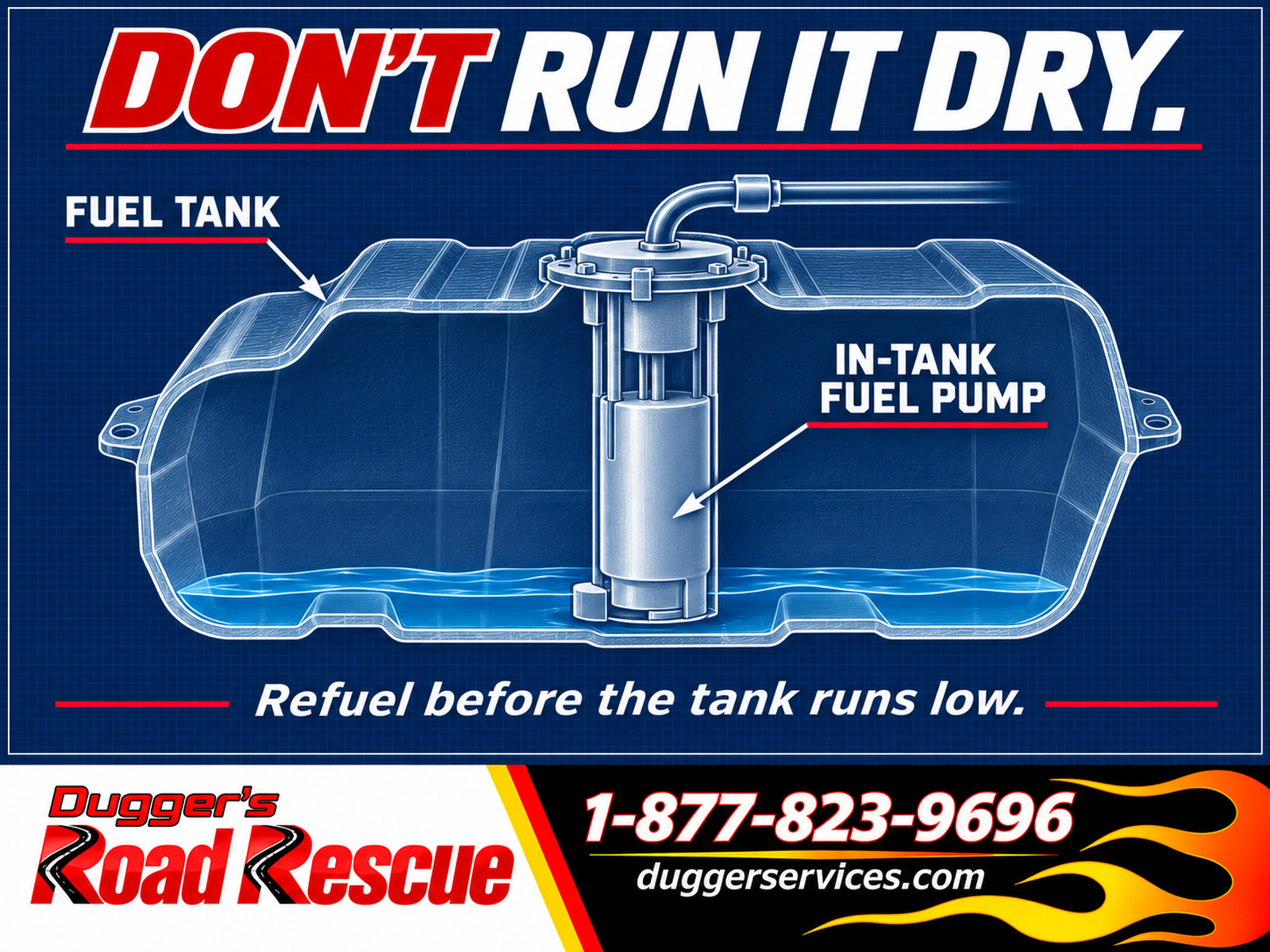
Nearly every gas-powered car and truck built since the 1990s uses fuel injection. An electric fuel pump sends fuel to the engine at a steady pressure. In most of these vehicles, the pump sits inside the gas tank, under the fuel.
That spot was chosen for a reason. The gasoline around the pump carries heat away from its small electric motor and helps keep it cool.
When the tank gets close to empty, the pump can pull in air along with fuel. Air does not cool the pump the way fuel does, so the pump can run hotter than it should. Running out once will not usually ruin a healthy pump. But doing it often, or driving on a nearly empty tank day after day, can be hard on the pump and can shorten its life. On many cars, a mechanic has to remove the back seat or lower the gas tank to replace it.
What You May Notice as the Tank Runs Dry
When the tank is almost empty, fuel can slide away from the pump on a curve, a hill or a hard stop. The engine may stumble, jerk or lose power before it quits. If that happens, get off the road right away, while the car is still moving.
After you get going again, the check engine light may come on. If it stays on, have a mechanic look at it. If it flashes, slow down and have it checked as soon as you can.
Diesel Engines Need Extra Care
When a diesel engine runs dry, air gets into the fuel lines. Some diesels push that air out after you add fuel and turn the key to on a few times, as the owner’s manual describes. Others need a mechanic to remove the air by hand. If you drive a diesel, keep the tank well above empty.
Why Cranking Over and Over Can Drain Your Battery
When an engine quits, most people turn the key again and again. If the tank is empty, that will not help. Each try takes a lot of power from the battery, and many batteries in Arizona and New Mexico are already worn down after a hot summer. Cranking over and over can drain the battery and can overheat the starter. If your car quits and the fuel gauge reads empty, stop cranking and call for help.
What to Do If You Run Out
Get as far off the road as you can while the car is still rolling, and turn on your hazard lights. Stay with the car. On a freeway shoulder, it is usually safest to stay inside with your seat belt on. Do not walk along the interstate with a gas can, especially at night. If you are ever in danger, call 911 first.
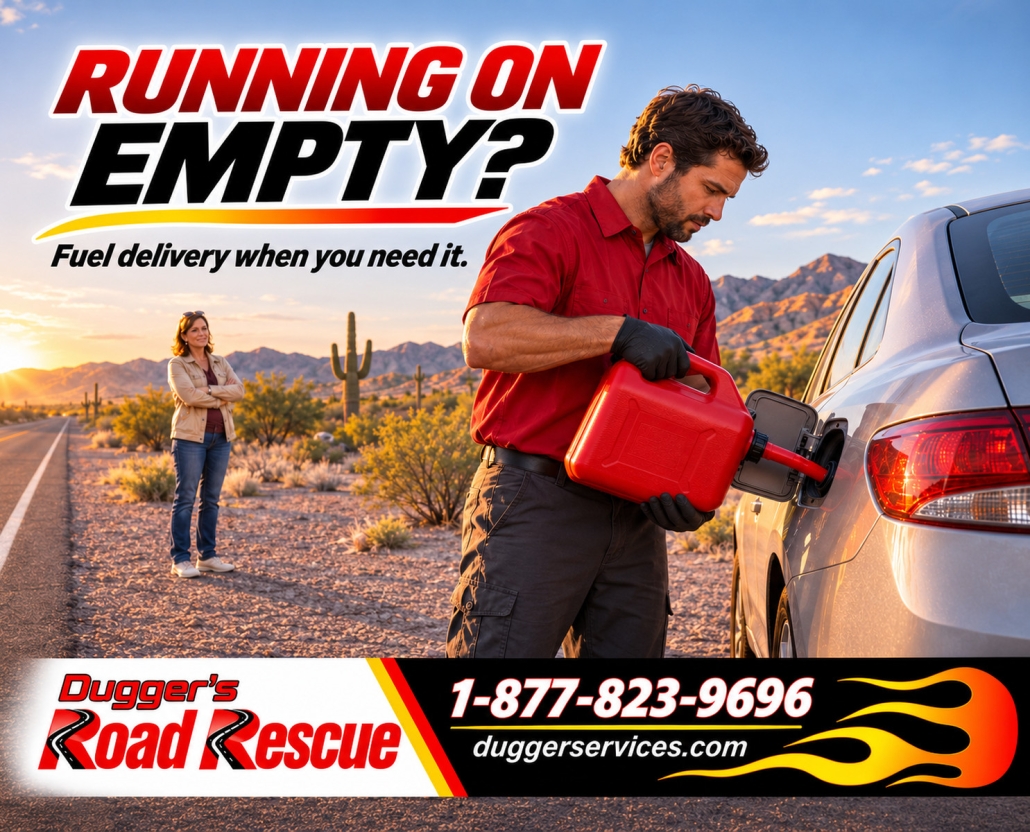
Then call us. Our emergency fuel delivery brings enough fuel to get you to the nearest gas station, 24 hours a day, every day of the year. In Arizona, we deliver fuel across the Phoenix metro and Tucson. In New Mexico, we deliver fuel in Albuquerque and Rio Rancho. Tell the dispatcher where you are, using a mile marker or exit number if you are on the interstate, and whether your vehicle takes gasoline or diesel.
How to Restart the Engine After Adding Fuel
Once there is fuel in the tank, give the pump a chance to fill the fuel lines before you crank:
- Turn the key to on without starting the engine. On a push-button car, press the start button without your foot on the brake until the dashboard lights come on. Your owner’s manual shows how.
- Wait a few seconds. You may hear a quiet hum as the pump builds pressure.
- Turn the key off, repeat two or three times, and then start the engine.
If the battery ran down from cranking, our technician can give it a jump start and test it on the spot. If the battery is worn out, we can replace it right there, with a 2-year warranty.
The Simple Habit That Prevents It
The best way to avoid all of this is a habit: treat a quarter tank as empty. Fill up before long drives and before stretches of highway with few gas stations. If you do run out anyway, one call brings the fuel to you.
Frequently Asked Questions
Can running out of gas damage my car?
It can. The electric fuel pump inside the tank uses the fuel around it to stay cool. Running the tank dry can make the pump run hot, and doing it often can shorten its life.
Will my car start right after you add fuel?
Usually, yes. Turn the key to on two or three times before you crank, so the pump can build pressure. If cranking drained the battery, our technician can jump start it and test it.
Do you deliver diesel?
Yes. Tell the dispatcher whether your vehicle takes gasoline or diesel when you call, and the technician will bring the right fuel. We deliver fuel 24 hours a day across the Phoenix metro, Tucson, Albuquerque and Rio Rancho.
Dugger’s Road Rescue
Phoenix metro and Tucson: (602) 274-1506.
Albuquerque and Rio Rancho: (505) 823-9696.
Toll-free: 1-877-823-9696.
24/7/365. Se habla español.
