Fall Is Here: Four Car Checks Before You Head Out to Enjoy It
Fall is a wonderful time to get outside in the Southwest. The summer heat is gone and the mornings are cool. After the rain we have had this season, the desert is green and the late wildflowers are out. Birds are moving south for the winter and stopping along the rivers and in the desert parks. In Albuquerque, hot air balloons fill the morning sky. It is the season to grab a camera, pack a lunch and go.
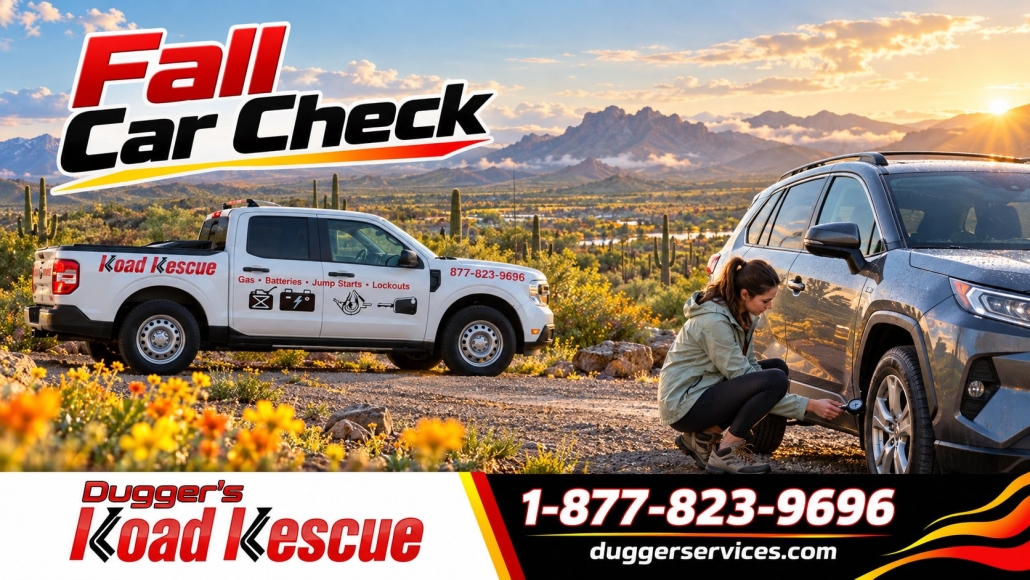
Before you head out, take a few minutes with your car. Many fall outings take you far from town, past the last gas station and out of cell range. A problem that is easy to fix in your driveway is much harder to fix at the end of a dirt road. Here are four simple checks to make before you go.
- Watch for battery warning signs, and get the battery tested before a long day out
- Check tire pressure when the tires are cold, and make sure your spare is ready
- Look for leaks, check your oil and coolant, and fill the tank before you leave town
Check 1: Pay Attention to Your Battery
Summer is hard on car batteries. Heat under the hood wears a battery down, and that damage does not heal. Many batteries make it through August and then fail in the fall, when cool mornings ask more of them.
Watch for these warning signs:
- The engine cranks slower than normal when you start the car
- The car takes more than one try to start, or does not start at all
- The headlights look dim while the engine idles
- The battery light comes on, or the clock and radio reset themselves
If you notice any of these, get the battery tested before your trip. A test shows how much power the battery can really deliver. That tells you more than “it started this morning.” If the battery is weak, it is much easier to replace it at home than at a scenic pullout. Also watch for the small things that drain a battery on a day trip: a dome light left on, a phone charger or dashcam left plugged in, or a door that did not fully close.
Check 2: Check Your Tire Pressure
Check your tire pressure in the morning, before you drive, while the tires are cold. Use the number on the sticker inside the driver’s door. Do not use the number on the side of the tire. That number is the most the tire can safely hold, not the pressure your car needs. Cooler fall mornings lower tire pressure, so a tire that was fine in July may be low now.
Look at the tread, and look for nails, cuts or bulges. Then find out whether your car has a spare tire. Many newer cars carry only a tire sealant kit. If you do have a spare, check its pressure too. Roads to parks and viewpoints are often rough, and gravel and broken pavement are hard on a tire that is already low.
Check 3: Look for Leaks and Top Off Your Fluids
Look at the ground where your car is usually parked. Fresh spots can mean a leak:
- Dark brown or black spots are usually engine oil
- Green, orange or pink spots with a sweet smell are usually coolant
- Red spots are often transmission or power steering fluid
- Clear water under the front of the car is usually normal drip from the air conditioner
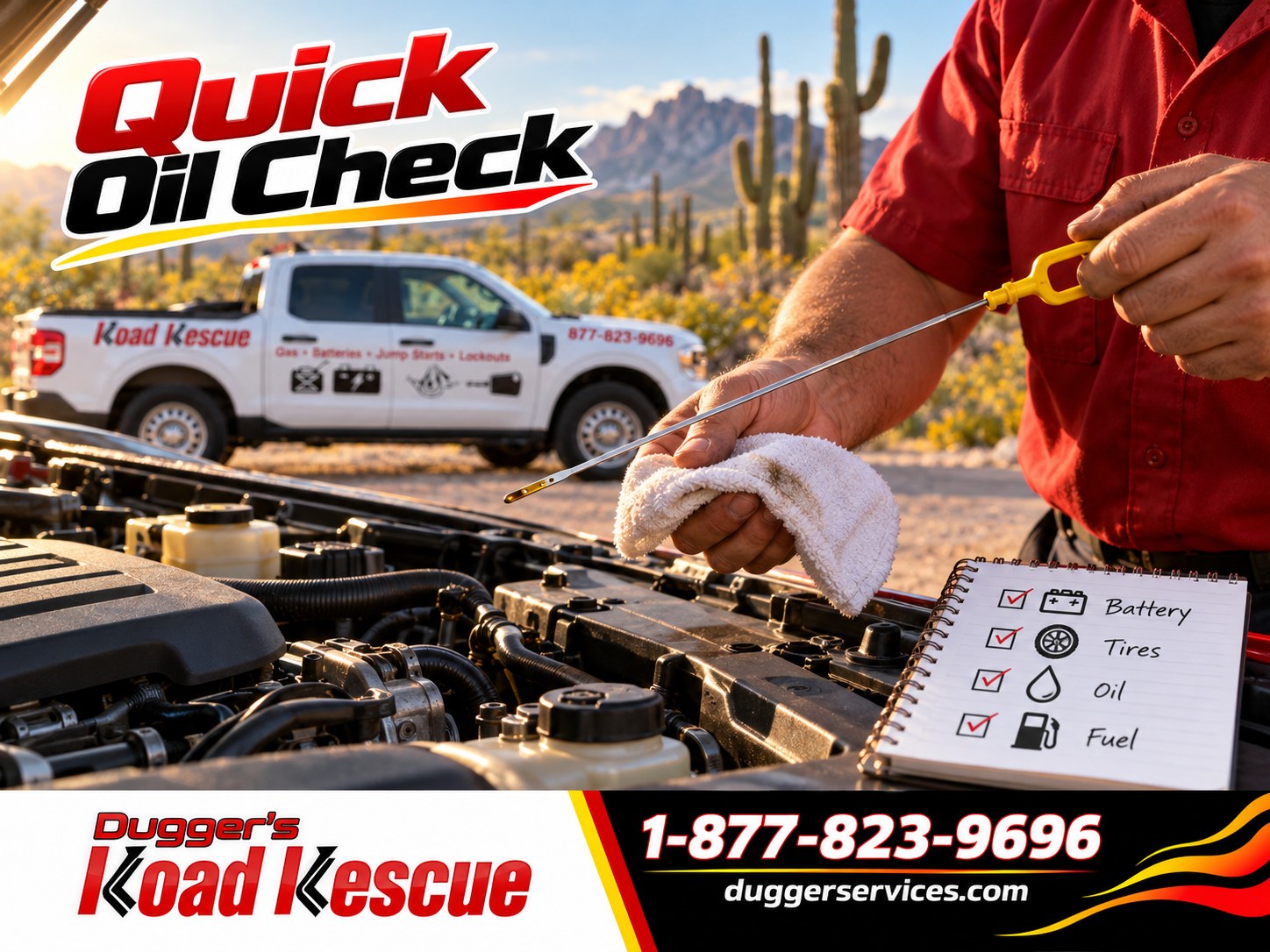
To check your oil, park on level ground and turn the engine off for a few minutes. Pull out the dipstick, wipe it clean, push it all the way back in, and pull it out again. The oil should sit between the two marks. If it is low, add the type of oil listed in your owner’s manual.
Check coolant only when the engine is cold. Look at the see-through coolant tank under the hood. The level should be between the low and full marks. Never open the radiator cap on a hot engine. The coolant inside is under pressure and can cause serious burns. If you find a leak, or you keep having to add oil or coolant, have a mechanic look at the car before a long drive.
Check 4: Fill the Tank Before You Leave Town
Fall drives often take you to places where gas stations are far apart. Fill up before you leave town, and do not let the tank drop below a quarter on the way home. Running out of gas can leave you on a narrow shoulder far from help, and it can be hard on your car’s fuel pump. Inside our service areas, we deliver fuel 24 hours a day. Out past them, a full tank is your best plan.
Pack a few extras too: water, a phone charger, a flashlight, and a warm layer for the cool mornings and evenings.
Where We Can Help
Dugger’s Road Rescue serves the Phoenix metro, Tucson, Albuquerque and Rio Rancho, 24 hours a day, 7 days a week, 365 days a year. The best time to call us is before your trip. We come to your home or workplace, test your battery and charging system, and replace the battery on the spot if it is worn out. Every battery we install comes with a 2-year warranty. If you have a flat or run low on fuel inside our service area, one call brings help to you. If you are ever in danger on the road, call 911 first.
Enjoy the season. A few minutes of checking now means more time watching the sky and less time waiting on the side of the road.
Frequently Asked Questions
Can Dugger’s test my battery before a trip?
Yes. We come to your home or workplace anywhere in the Phoenix metro, Tucson, Albuquerque and Rio Rancho. We test the battery and the charging system, and we replace the battery on the spot if it is worn out.
What tire pressure should I use?
Use the number on the sticker inside the driver’s door or in your owner’s manual. Check it in the morning before you drive, while the tires are cold.
Is it safe to check coolant when the engine is warm?
No. Wait until the engine is cold. Coolant in a hot engine is under pressure and can cause serious burns if you open the cap.
Dugger’s Road Rescue
Phoenix metro and Tucson: (602) 274-1506.
Albuquerque and Rio Rancho: (505) 823-9696.
Toll-free: 1-877-823-9696.
24/7/365. Se habla español.
