The Winter Desert Car Kit: What to Keep in the Trunk From November to March
Winter in the Southwest is easy to underestimate. Afternoons are often mild. Then the sun goes down. Days are short, and it gets dark early in the evening. Desert temperatures can drop 20 degrees or more between afternoon and night. Some highways also have long stretches with few towns and weak cell service. With Thanksgiving this week, now is a good time to pack a kit that stays in the trunk until spring.
- In a desert winter, the main risks of a breakdown are cold, dark and distance, more than snow
- Every item in the kit solves a problem you could face on the side of the road at night
- Check your spare before you need it, or find out whether your car has one at all
Why a Winter Kit Matters Here
A breakdown at 3 p.m. on a 65-degree afternoon is an inconvenience. The same breakdown at 9 p.m., with the temperature in the 20s or 30s, is harder. Parts of I-10, I-17, I-25 and I-40 are far from the nearest town, and cell service can be weak, so help may take longer. A small kit keeps you warm and safe while you wait.
What to Keep in the Trunk
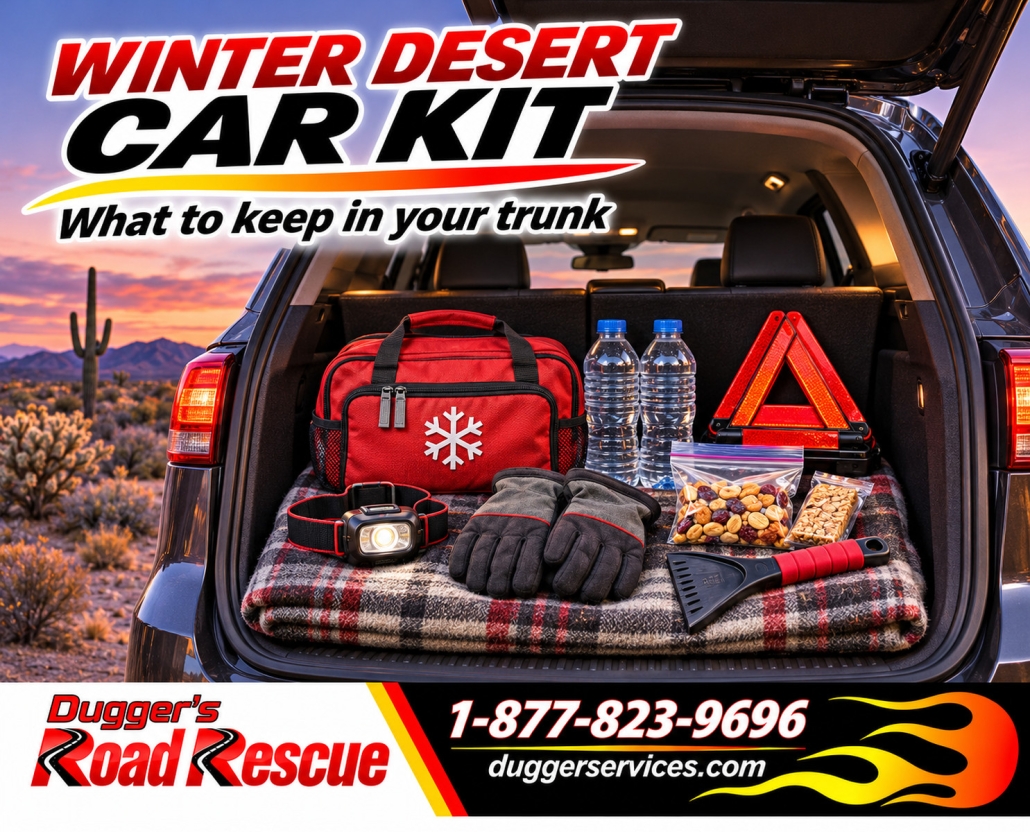
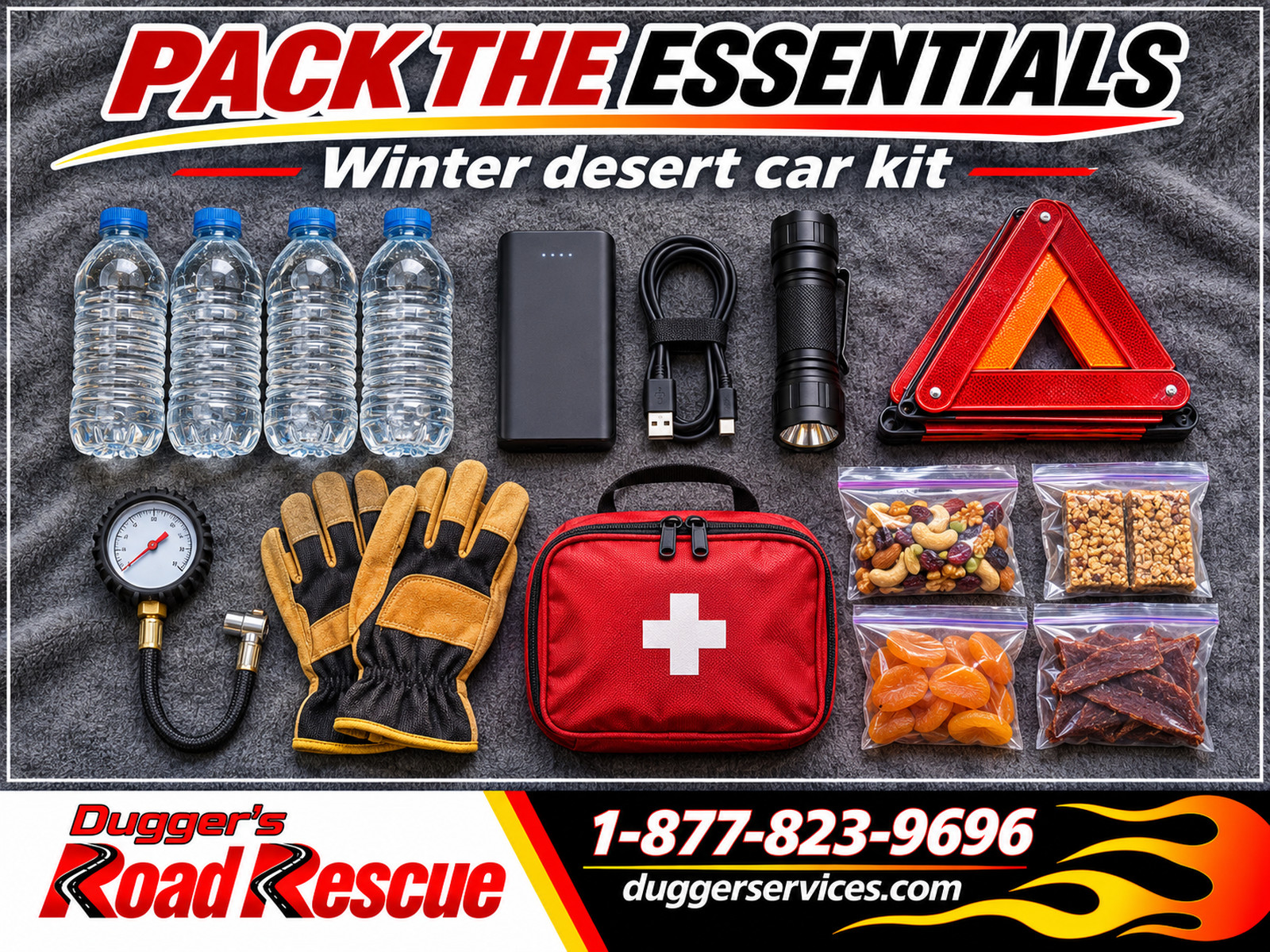
- Water. You still need to drink during a long wait.
- Blankets or a warm layer for each person. A car loses its heat quickly once the engine is off.
- A phone charger and a power bank, so your phone stays charged even if the car battery is dead.
- A flashlight or headlamp, with spare batteries. A headlamp leaves both hands free.
- Reflective triangles. They warn other drivers. Set them out only if you can do it safely, away from moving traffic.
- A tire pressure gauge. Pressure drops about 1 PSI for every 10 degrees the air cools.
- Gloves. Cold metal and a dirty tire are easier to handle with your hands covered.
- A basic first aid kit, for small cuts and scrapes.
- Snacks, like nuts or granola bars.
- An ice scraper, for frosty mornings in Albuquerque, Rio Rancho and the mountains.
- A printed card with the dispatch numbers, in case your phone dies.
For that card: Phoenix metro and Tucson, (602) 274-1506. Albuquerque and Rio Rancho, (505) 823-9696. Toll-free, 1-877-823-9696.
Check the Spare, or Find Out If You Have One
Lift the floor of the trunk or cargo area before your next long drive. Many newer cars do not carry a spare at all. They come with a tire sealant kit and a small air pump instead. A sealant kit can fix some small holes in the tread, but it will not fix a cut in the side of the tire or a tire that has come off the wheel.
If you do have a spare, check its pressure. Small temporary spares often need more air than your regular tires. The right number is on the side of the spare or on the sticker inside the driver’s door. Make sure the jack and lug wrench are there too. If you get a flat, we can put the spare on for you. In Arizona, we put on spares across the Phoenix metro and Tucson. In New Mexico, we put on spares in Albuquerque and Rio Rancho.
What Not to Carry
Leave the gas can at home. Gasoline in the trunk or the cabin is a fire risk, and fumes from a can that leaks or tips over build up in a closed space. If you run low, call us. We bring enough fuel to get you to a station. In Arizona, we bring fuel to drivers in the Phoenix metro and Tucson. In New Mexico, we bring fuel to drivers in Albuquerque and Rio Rancho. Tell the dispatcher whether your vehicle takes gasoline or diesel.
Before You Leave, and If You Have to Stop
Before a long winter drive, fill up when the tank reaches half, because gas stations can be far apart. If your battery is more than a few years old, have it tested. Summer heat wears a battery down, and a cold night is when that damage shows. Every battery we install comes with a 2-year warranty.
If the car does stop, pull as far off the road as you can, turn on your hazard lights, and stay with the vehicle unless it is in a dangerous spot. A car is much easier to find than a person on foot, and it protects you from wind and cold. If you run the engine for heat, make sure the exhaust pipe is not blocked by snow or dirt, and open a window a little. Call dispatch and give your nearest mile marker or exit. If anyone is hurt or you feel unsafe, call 911 first.
Most of this kit is already somewhere in your house. Put it in one bin this week and leave it in the trunk until March. If you need us, we dispatch 24 hours a day, 365 days a year.
Frequently Asked Questions
What should I keep in my car for winter driving in Arizona and New Mexico?
Water, a blanket or warm layer, a phone charger and power bank, a flashlight or headlamp with spare batteries, reflective triangles, a tire pressure gauge, gloves, a basic first aid kit, snacks, and a printed card with your roadside dispatch numbers. Add an ice scraper for Albuquerque, Rio Rancho and the mountains.
Is it safe to carry a gas can in my trunk?
It is not a good idea. Gasoline fumes can build up in a closed trunk or cabin and create a fire risk. If you run out of fuel, call for fuel delivery instead.
Should I stay with my car if it breaks down in the desert?
Yes, unless the car is in a dangerous spot. A vehicle is easier to find than a person on foot, and it protects you from wind and cold. Turn on your hazard lights and call dispatch with your nearest mile marker or exit.
Dugger’s Road Rescue
Phoenix metro and Tucson: (602) 274-1506.
Albuquerque and Rio Rancho: (505) 823-9696.
Toll-free: 1-877-823-9696.
24/7/365. Se habla español.
