
The Thanksgiving Road Trip Checklist: Phoenix, Tucson and Albuquerque
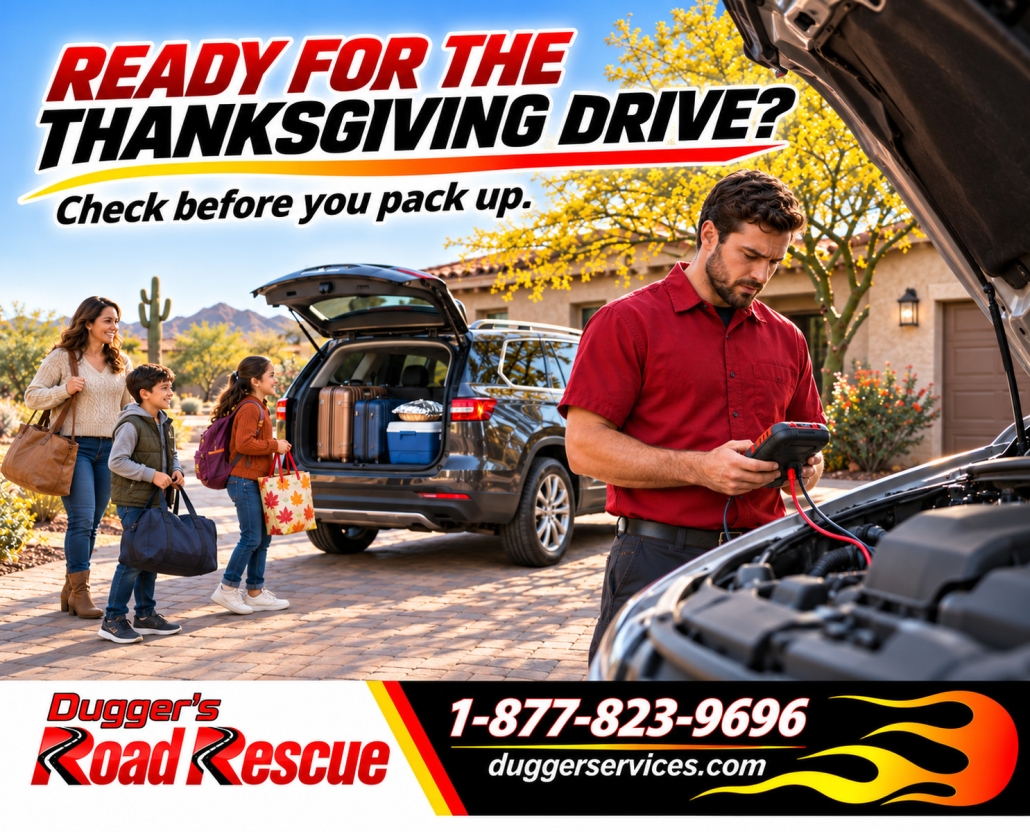
Next week, many families in Arizona and New Mexico will load up the car and drive to a holiday dinner. Some trips are a short run down I-10. Others cross half a state on I-40 or I-25, or climb into the mountains on I-17. A full car, busy roads and colder weather at the other end make a holiday trip different from a drive across town. Here is a checklist for that trip, in the order to do it.
- Get the battery tested the week before you leave, because cold mountain mornings are hard on a weak battery
- Set tire pressure for a fully loaded car, and pack so you can still reach the spare
- Plan your fuel stops and leave extra time, because holiday traffic is heavy and stop-and-go driving uses more fuel
1. Get the Battery Tested the Week Before
Summer heat wears a battery down for good. In the Phoenix metro and Tucson, many batteries last only two to three years. That damage does not show on a warm morning at home. It often shows on a cold morning far from home.
Many holiday routes go up. I-17 climbs from the desert to about 7,000 feet in northern Arizona. I-40 west of Albuquerque climbs past 7,000 feet as well. Late November mornings at those heights are often below freezing. Cold slows the chemistry inside the battery and makes engine oil thicker, so the engine needs more power to start just when the battery has less to give.
Get a battery test about a week before you leave, so there is time to replace a weak battery at home. A proper test measures what the battery can deliver under a load, not just its voltage. We test batteries at your home or workplace across the Phoenix metro and Tucson. We also test batteries in Albuquerque and Rio Rancho. If the battery is worn out, we replace it on the spot, with a 2-year warranty.
2. Set Tire Pressure for a Loaded Car
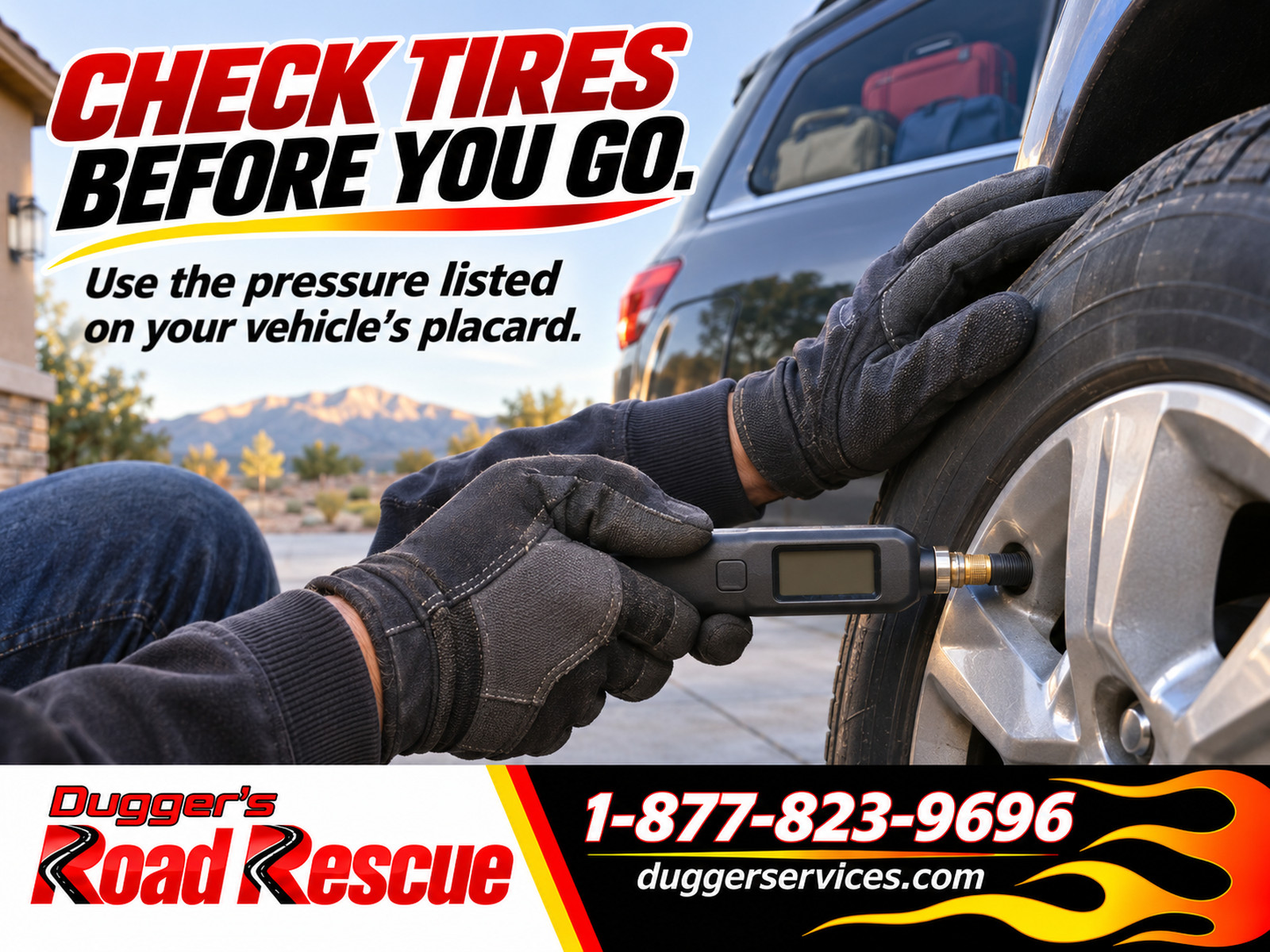
A car full of people, bags and a cooler puts more weight on the tires. Check the pressure when the tires are cold, before you drive. Start with the number on the sticker inside the driver’s door. Some owner’s manuals list a higher pressure for a fully loaded car, so look in yours. Never go above the maximum number printed on the side of the tire.
Tire pressure drops about 1 PSI for every 10 degrees the air cools. Tires set on a 75-degree afternoon in Phoenix can read several PSI low on a 25-degree morning in the mountains. Check them again, cold, the morning after you arrive. Do not let air out of a tire that is hot from a long drive.
3. Pack So You Can Reach the Spare
In many cars and SUVs, the spare tire and jack sit under the floor of the cargo area, right where the luggage goes. Lift the floor before you pack. Many newer cars have no spare, only a tire sealant kit and a small air pump. If you have a spare, check its pressure. A small temporary spare has a label that lists a top speed and a distance limit. Stay within both.
Pack so you can reach the spare and jack without unloading the car. If you get a flat, do not keep driving on it. Pull off somewhere safe and call for help. Inside our service areas, we change flat tires to your spare across the Phoenix metro and Tucson, and we change flat tires in Albuquerque and Rio Rancho.
4. Plan Fuel Stops and Leave Extra Time
The day before Thanksgiving and the Sunday after are often among the busiest travel days of the year. Stop-and-go traffic uses more fuel than open highway and can keep you on the road longer than you planned.
Look at your route before you leave and decide where you will stop for fuel. Some stretches of I-25 and I-40 have long gaps between towns. Fill up before those stretches, and treat a quarter tank as empty. Running out of gas can be hard on a modern car’s fuel pump. Before you go, check road conditions with the state transportation department, since snow is possible in the mountains this time of year.
5. Before You Drive Home
A car that sits for a few days away from home still needs a quick check. Before the drive home, make sure no phone charger or dashcam was left plugged in and that every door is fully closed. Check tire pressure again while the tires are cold. Take breaks so the driver stays alert.
6. Save One Number
Save 1-877-823-9696 in every phone in the car. It reaches our dispatch 24 hours a day, 365 days a year, including Thanksgiving Day. Se habla español.
If you break down, pull as far off the road as you can and turn on your hazard lights. On a freeway shoulder, staying belted in the car is usually safer than standing beside it. On a remote stretch, stay with the vehicle. If anyone is hurt or you feel unsafe, call 911 first.
Take care of this list over the weekend, and enjoy Thursday with the people you drove to see.
Frequently Asked Questions
When should I get my battery tested before a Thanksgiving road trip?
About a week before you leave, so there is time to replace it if needed. If your battery has been through two or more Arizona summers, get it tested even if it seems fine.
Should I change my tire pressure for a fully loaded car?
Start with the number on the sticker inside the driver’s door, checked when the tires are cold. Some owner’s manuals list a higher pressure for a full load, so check yours.
Is Dugger’s open on Thanksgiving Day?
Yes. We dispatch 24 hours a day, 365 days a year, including Thanksgiving Day, across the Phoenix metro, Tucson, Albuquerque and Rio Rancho.
Dugger’s Road Rescue
Phoenix metro and Tucson: (602) 274-1506.
Albuquerque and Rio Rancho: (505) 823-9696.
Toll-free: 1-877-823-9696.
24/7/365. Se habla español.
