
Why Car Batteries Don’t Last in the Desert
Most drivers assume cold weather is the biggest threat to a car battery. In Phoenix, Tucson, and Albuquerque, the opposite is true. Sustained high temperatures break down battery chemistry faster than freezing temperatures do, and the result is a shorter overall lifespan that catches many drivers off guard. If you have ever walked out to a dead battery on a perfectly clear morning, the heat from the days before is almost certainly the reason.
- Extreme heat accelerates the internal chemical reaction in a car battery, causing fluid evaporation and permanent capacity loss
- Batteries in desert climates like Arizona and New Mexico typically last two to three years, compared to four to five years in cooler regions
- Mobile battery delivery and installation means you do not have to get a dead battery to a shop when it fails at home, at work, or on the road
How Heat Damages a Car Battery
A car battery generates electricity through a chemical reaction between lead plates and sulfuric acid. Heat speeds up that reaction. In moderate climates, this is not a problem because the charging system keeps things in balance. In a desert climate where under-hood temperatures can reach 140 degrees or more on a summer afternoon, the reaction runs too fast. The electrolyte fluid inside the battery evaporates. The lead plates corrode at an accelerated rate. The internal grid structure weakens. Each of these processes is irreversible, and they compound over time. A battery that starts a Phoenix summer at 80 percent capacity might be at 50 percent by October, and that is when it starts failing to crank the engine on cooler mornings when the chemical reaction slows down.
Why Desert Batteries Fail Sooner Than You Expect
Battery manufacturers rate their products based on standard testing conditions that do not reflect desert driving. The industry standard tests at 77 degrees Fahrenheit. In Phoenix, the average high temperature exceeds that standard for roughly seven months of the year. That gap between testing conditions and real-world conditions is why a battery rated for five years of service might give you two and a half in the Valley.
Altitude plays a role in New Mexico as well. Albuquerque sits at roughly 5,000 feet, where the thinner air means the cooling system works harder and under-hood temperatures stay elevated longer. Combined with summer highs that regularly hit the upper 90s, batteries in the Albuquerque metro face a double stress that most drivers do not account for when they buy a replacement.
Signs Your Battery Is Losing Capacity
A failing battery rarely dies all at once. It gives warning signs over a period of days or weeks if you know what to look for.
- The engine cranks more slowly than it used to, especially on the first start of the day.
- The headlights dim slightly at idle.
- The dashboard battery or charging system warning light flickers or stays on.
- Electronics like the radio or GPS occasionally reset themselves.
A sulfur or rotten egg smell near the battery indicates the electrolyte is boiling off, which means the battery is overcharging or the internal cells are damaged. Any of these symptoms in a battery that is more than two years old in a desert climate should be taken seriously.
What to Do When Your Battery Dies
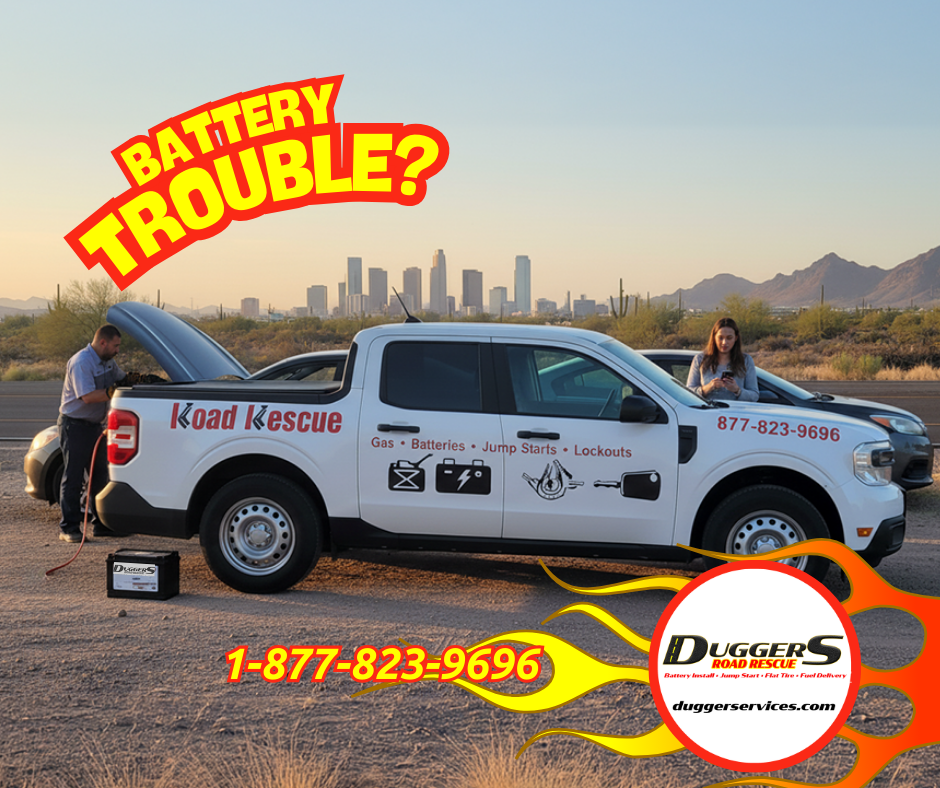
A dead battery does not mean a trip to the auto parts store and a taxi ride to get there. Dugger’s Road Rescue delivers and installs car batteries on-site, wherever you are. Our technicians test your battery and charging system first to confirm the battery is the problem and not the alternator or a parasitic drain. If the battery needs to be replaced, we install a new one on the spot. The service includes a 2-year nationwide warranty and disposal of the old battery. Average arrival time is 30 minutes from the time you call.
We carry batteries designed for the demands of desert driving, including options rated for high-temperature endurance and the altitude conditions specific to New Mexico. Whether you are stranded in a parking lot in Scottsdale, stuck in your driveway in Rio Rancho, or pulled over on I-10 outside Tucson, the process is the same: call, we come to you, and you are back on the road.
Desert heat is hard on car batteries, and there is no way around that. What you can control is how prepared you are when the battery reaches the end of its life. If your current battery is more than two years old, get it tested before summer arrives. And if it fails, you do not have to figure out how to get your car to a shop. We bring the battery to you.
Dugger’s Road Rescue
24/7 Emergency Roadside Assistance
Phoenix Metro | Tucson | Albuquerque | Rio Rancho
(877) 823-9696
Se Habla Español

