
Dead Battery on the Road? Here’s Exactly What to Do – Holiday Travel Safety Guide from Dugger’s Road Service
Holiday road trips are supposed to be exciting. You’ve packed the car, loaded up the playlist, and mapped out your route through Arizona’s stunning landscapes. Then you stop for gas in Tempe, turn the key, and… nothing. Just a weak click and the sinking feeling that you’re stuck.
If you’ve ever experienced a dead battery emergency during holiday travel, you know that moment of frustration mixed with uncertainty. What do you do first? Is it safe to accept help from strangers? How long will you be stranded?
At Dugger’s Road Service, we’ve helped thousands of travelers navigate exactly this situation across Phoenix, Tempe, Scottsdale, and along major Arizona travel corridors like I-10 and I-17. Whether you’re a local heading to Sedona for the weekend or an out-of-state driver passing through, this guide will walk you through every step to stay safe, diagnose the problem, and get back on the road quickly.
How to Tell If It’s Really a Dead Battery
Not every car that won’t start has a dead battery, but certain signs make the diagnosis pretty clear. Here’s what to listen and look for:
- Clicking sound when you turn the key. This is the most common indicator. You’ll hear a rapid clicking noise, but the engine won’t turn over.
- Dim or flickering dashboard lights. When you turn the key to the “on” position, the dashboard should light up brightly. If the lights are noticeably dim or flicker weakly, your battery likely doesn’t have enough charge.
- Slow or no engine crank. A healthy battery will make the engine turn over quickly and smoothly. A dying battery causes a slow, labored cranking sound, or no movement at all.
- Weak interior lighting. Before you even try starting the car, check your dome light or headlights. If they’re faint or won’t turn on, that’s a telltale sign.
- Battery warning light. Some vehicles will display a battery symbol on the dashboard if there’s a charging system issue.
Here in Arizona, extreme desert heat makes battery problems far more common than in most other states. Phoenix regularly sees summer temperatures above 110 degrees, and that kind of heat accelerates battery fluid evaporation and damages internal components. While winter mornings can dip into the 40s, it’s the scorching summer months that kill batteries fastest. If your battery is more than three years old and you’re experiencing symptoms during Arizona’s brutal summer, a dead battery is very likely the culprit.
First Things First: Stay Safe
Holiday travel means heavier traffic, especially along I-10 through Phoenix, the Loop 101 around Scottsdale, or I-17 heading north toward Flagstaff. Before you do anything else, prioritize safety:
Pull off the road as far as possible. If your car dies while driving, coast to the shoulder and get as far from traffic lanes as you can. On busy Phoenix-area freeways, every foot matters.
Turn on your hazard lights immediately. This alerts other drivers that you’re disabled. Even in daylight, hazards significantly increase your visibility.
Use reflective triangles or flares if you have them. Place them 100 feet behind your vehicle to give approaching traffic advance warning.
Stay inside the vehicle on highways. Interstates like I-10 and the Loop 202 have high-speed traffic. It’s almost always safer to remain in your car with your seatbelt on than to stand on the shoulder.
Avoid asking strangers for help. It’s tempting to flag down another driver, but roadside situations can be unpredictable. Calling a professional service is always the safer choice.
If you’re traveling with children or pets, keeping everyone calm and safely inside the vehicle is priority number one. We’ll talk more about family-specific considerations in just a bit.
Quick Checks You Can Do Before Calling for Help
You’re not a mechanic, and that’s perfectly fine. But there are a few simple, non-technical checks you can make that might save you a service call or at least give helpful information to your roadside technician.
Check for corrosion on the battery terminals. Pop the hood and take a look at your battery. The terminals (the metal posts where cables connect) sometimes develop white, blue, or green crusty buildup. Heavy corrosion can prevent a proper connection. If you see this, it might be the issue, though cleaning terminals on the roadside isn’t always safe or practical.
Make sure your key fob isn’t the problem. Modern push-to-start vehicles require a functioning key fob. If your fob battery is dead, the car might seem completely powerless. Try using your spare fob or replacing the fob battery if you have a replacement on hand.
Did you leave lights or accessories on? It happens to everyone. Interior lights, headlights left on during a daytime stop, or phone chargers draining power overnight can kill an otherwise healthy battery.
Try tightening battery cables. If you’re comfortable and in a safe location, you can check whether the battery cable clamps are loose. A loose connection mimics a dead battery. Just be careful not to touch both terminals at once or let metal tools bridge them.
Consider a jump start only if conditions are safe. If you have jumper cables and another driver offers help in a safe, well-lit area (like a gas station parking lot), a jump might work. But attempting this on a highway shoulder is dangerous. And if you’re uncertain about the process, it’s easy to damage modern vehicle electronics.
A word of caution: Roadside jump-starts can be risky if done incorrectly. Connecting cables backwards can fry your vehicle’s computer systems, and sparks near a battery can cause fires in rare cases. If you’re not confident or the location isn’t safe, calling Dugger’s Road Service is the smart move.
Call Dugger’s Road Service 24/7 at (877) 823-9696 for immediate roadside assistance anywhere in Phoenix, Tempe, Scottsdale, or along major Arizona travel routes.
When to Call Dugger’s Road Service
Some situations clearly call for professional help. Don’t hesitate to reach out if:
You have a dead car battery.
Your car won’t crank at all. No sound, no dashboard lights, no interior power. This likely means you need more than a simple jump.
You’re traveling in an unfamiliar area. Being stranded in a part of Phoenix you don’t know, or along the Loop 101 in Scottsdale, adds stress and uncertainty. A local roadside service knows these roads and can reach you fast.
You don’t have jumper cables or a portable jump starter. Not everyone travels with these tools, and that’s okay. We come equipped.
You’re uncomfortable approaching another driver or being approached. Your safety and peace of mind matter. There’s no shame in wanting a professional, marked vehicle instead of relying on a stranger.
You need fast service during peak travel days. Thanksgiving week, Christmas travel, spring training season, and snowbird winter months see heavy traffic and more breakdowns. Dugger’s prioritizes stranded travelers during these busy times.
You have kids, elderly passengers, or pets in the car. Family situations require extra care and faster response. We understand that a dead battery isn’t just an inconvenience when you have little ones asking “When can we go?” or a pet who needs relief.
You’re stuck in extreme temperatures. Arizona summers are no joke. Sitting in a disabled car when it’s 115 degrees outside is dangerous. We move quickly in these scenarios, and winter desert nights can also get surprisingly cold.
Dugger’s Road Service has built a reputation across the Phoenix metro area for being there when travelers need us most. We’re available 24/7, we know the local roads and traffic patterns, and we treat every call with the urgency and care we’d want for our own families.
What Dugger’s Will Do for You
When you call (877) 823-9696, here’s exactly what happens:
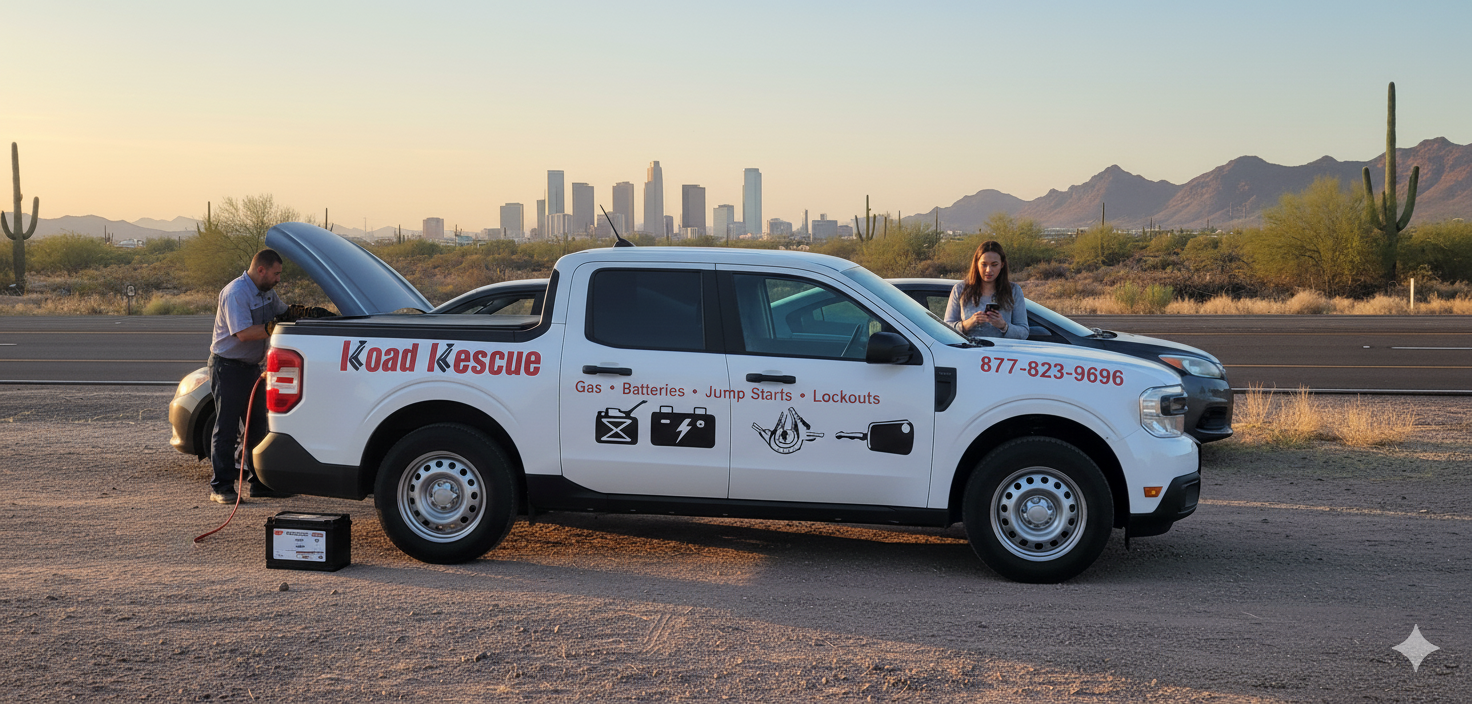
Immediate dispatch. We take your location, vehicle details, and situation information, then send the nearest available technician. You’ll get an estimated arrival time and real-time updates.
On-site battery testing. Our technicians arrive with diagnostic equipment. We can test your battery’s voltage and health on the spot, so you’ll know whether a jump will work or if you need a replacement.
Professional jump-start service. If your battery has enough life left, we’ll safely jump your vehicle using proper procedures that protect your car’s electronics. We’ll also let the engine run long enough to build up charge.
Battery replacement when possible. If your battery has failed completely, and you’re in a location where we can swap it out, we often carry common battery sizes in our service vehicles. That means you can drive away with a brand-new battery instead of just limping to a shop.
Safety check before you leave. We’ll make sure your alternator is charging, your connections are secure, and you’re confident about the next steps. If there’s an underlying issue beyond the battery, we’ll let you know.
Friendly communication throughout. We know roadside emergencies are stressful. Our technicians are trained to be patient, clear, and reassuring. You’ll never feel rushed or talked down to.
Holiday travelers especially appreciate our approach. Whether you’re passing through Phoenix on your way to California or you’re visiting family in Scottsdale for the holidays, we treat you like a neighbor, not a transaction.
Holiday Travel Tips to Prevent a Dead Battery
An ounce of prevention, as they say. Here are practical steps you can take before and during your trip to reduce the chances of being stranded:
Get your battery tested before long trips. Most auto parts stores and service centers offer free battery testing. If your battery is three years old or more, it’s living on borrowed time. Get it tested and replaced if needed before you leave home.
Avoid running AC or heat while parked. Idling with climate control on drains your battery faster than you’d think. If you’re waiting in a parking lot, turn off the engine. In Phoenix summers, park in shade whenever possible instead of running the AC.
Don’t leave electronics charging overnight. Phone chargers, GPS units, dash cams, and other accessories draw power even when the engine is off. Unplug everything when you park for the night.
Keep jumper cables or a portable jump starter in your car. Portable jump starters have become incredibly affordable and reliable. They’re compact, easy to use, and can save you in a pinch.
Pack an emergency travel kit. Include water, snacks, a flashlight, sunscreen, a phone charger, and basic tools. In Arizona’s desert climate, water is especially critical. Plan for at least a gallon per person.
Check your battery’s age. Look for a sticker or stamp on the battery itself showing the manufacture date. Batteries older than three years are at higher risk of sudden failure, especially in Phoenix’s extreme heat.
Plan fuel and food stops in populated areas. If you’re driving I-10 toward Tucson or I-17 north toward Flagstaff, don’t let your tank get too low. Stop in towns like Casa Grande or Black Canyon City where help is readily available if something goes wrong.
Seasonal considerations for Arizona travelers:
- Summer heat: Phoenix summers routinely exceed 110 degrees. Batteries fail more often in extreme heat. Have yours tested in May before the worst of summer hits. Never leave water bottles in a hot car—have them in a cooler.
- Spring training season: March brings baseball fans from across the country to Phoenix and Scottsdale. Traffic around stadiums in Tempe and Surprise gets heavy. Make sure your car is road-ready before heading to a game.
- Snowbird season: Winter months see an influx of visitors escaping cold climates. I-10, Loop 101, and routes to Scottsdale and Mesa experience heavier traffic from November through March.
- Weekend trips north: Heading to Sedona, Flagstaff, or the Grand Canyon? The elevation changes and temperature drops can stress an aging battery. Test before you go.
What to Do If You’re Traveling With Kids, Pets, or in Extreme Temperatures
Family travel adds layers of complexity to a roadside emergency. Here’s how to handle it:
Keep kids in the car with doors locked. Highways are dangerous, and children can be unpredictable. Keep everyone safely inside the vehicle with seatbelts on until help arrives. Bring out games, snacks, or tablets to keep little ones occupied and calm.
Avoid letting pets roam outside. Even well-behaved dogs can bolt into traffic if startled. Keep pets leashed and inside the car. In Phoenix heat, make sure they have water and shade. If your AC is out and temperatures are dangerous, tell dispatch immediately.
Stay hydrated. Arizona’s dry climate can dehydrate you quickly, and summer heat makes this critical. Keep water bottles in the car and sip regularly while you wait. If you’re stranded in summer without air conditioning, wet a cloth for your neck and face.
Run climate control sparingly. If your battery is weak, running the AC or heat might drain it completely. If you need climate control to stay safe in extreme heat, run it in intervals rather than continuously, and let the roadside service know you’re in a temperature-sensitive situation so they can prioritize your call.
Communicate your situation clearly to dispatch. When you call Dugger’s at (877) 823-9696, let us know if you have children, elderly passengers, pets, or if temperatures are dangerous. We’ll adjust our response accordingly and check in with you while the technician is en route.
Our drivers are trained for family-sensitive roadside rescues. We’ve helped countless parents keep kids calm, assisted elderly travelers who need extra patience, and made sure pets stay safe and comfortable during Arizona’s extreme temperatures. You’re in good hands.
How to Avoid Scams or Unsafe Roadside Situations
Unfortunately, not everyone offering roadside help has good intentions. Here’s how to protect yourself:
Only use licensed, marked vehicles. Legitimate roadside assistance companies like Dugger’s arrive in clearly branded trucks with company logos, phone numbers, and proper lighting. If a vehicle doesn’t look professional, don’t open your door.
Don’t accept help from strangers in personal cars. It’s one thing if a Good Samaritan offers to call for help on your behalf. It’s another if they insist on jumping your car or offering a ride. Politely decline and call a professional service.
Ask for driver name and truck number. When you call Dugger’s, we’ll automatically provide the technician’s name, truck number, and estimated arrival time. When they arrive, verify this information before stepping out of your vehicle.
Check Google reviews before calling anyone. If you’re stranded and need to search for roadside assistance, take 30 seconds to check reviews. Dugger’s Road Service has a strong reputation across Phoenix, Tempe, and Scottsdale because we prioritize safety, transparency, and fair pricing.
Stay inside the vehicle until the marked professional arrives. Even if someone seems friendly, it’s safer to stay in your locked car until you see the official service truck pull up.
Roadside scams are rare, but they do happen, especially in high-traffic tourist areas like Old Town Scottsdale or near Phoenix Sky Harbor Airport. Using a reputable local company eliminates that risk entirely.
Stuck with a dead battery or a car that won’t start?
Dugger’s Road Service is available 24/7 throughout Phoenix, Tempe, Scottsdale, and surrounding areas including I-10, I-17, Loop 101, and routes to Sedona, Tucson, and Flagstaff. Our trained roadside technicians respond fast, treat you with respect, and get you safely back on the road.
Call (877) 823-9696 and help will be on the way within minutes.
Whether you’re a local dealing with an unexpected breakdown or a holiday traveler passing through Arizona, we’re here for you. Save our number in your phone right now. It’s one of the smartest travel tips you can give yourself and your family.
Frequently Asked Questions
How long does roadside assistance take in Phoenix? Response times vary depending on your location and traffic conditions, but Dugger’s Road Service typically arrives within 30 to 45 minutes in the Phoenix metro area, including Tempe and Scottsdale. For travelers along I-10 or I-17 outside the city, we provide estimated arrival times when you call and keep you updated.
What should I do if my car won’t start during holiday travel? First, stay safe by pulling off the road, turning on hazard lights, and staying inside your vehicle. Check for obvious issues like corrosion or loose cables, but don’t attempt repairs on busy highways. Call Dugger’s Road Service at (877) 823-9696 for professional assistance. We’re available 24/7, including holidays.
Can Dugger’s replace my battery on the spot? In many cases, yes. Our service vehicles often carry common battery sizes, and if we can perform the replacement safely at your location, we will. This saves you the hassle of limping to a shop and gets you back on the road immediately.
Is it safe to jump-start a car on the side of a highway? It’s generally not recommended. High-speed traffic on Phoenix-area freeways, uneven shoulders, and the complexity of modern vehicle electronics make roadside jump-starts risky. It’s safer to call a professional service like Dugger’s, where trained technicians can perform the jump safely and correctly.
Do you serve travelers outside of Phoenix? Yes. Dugger’s Road Service covers major travel corridors throughout the Phoenix metro area, including I-10 east and west, I-17 north toward Flagstaff, Loop 101 around Scottsdale and Tempe, and surrounding communities like Mesa, Chandler, and Glendale. If you’re unsure whether we can reach you, call (877) 823-9696 and we’ll let you know.
Dugger’s Road Service | (877) 823-9696 | Available 24/7
Serving Phoenix, Tempe, Scottsdale, and Greater Arizona Travel Route

